
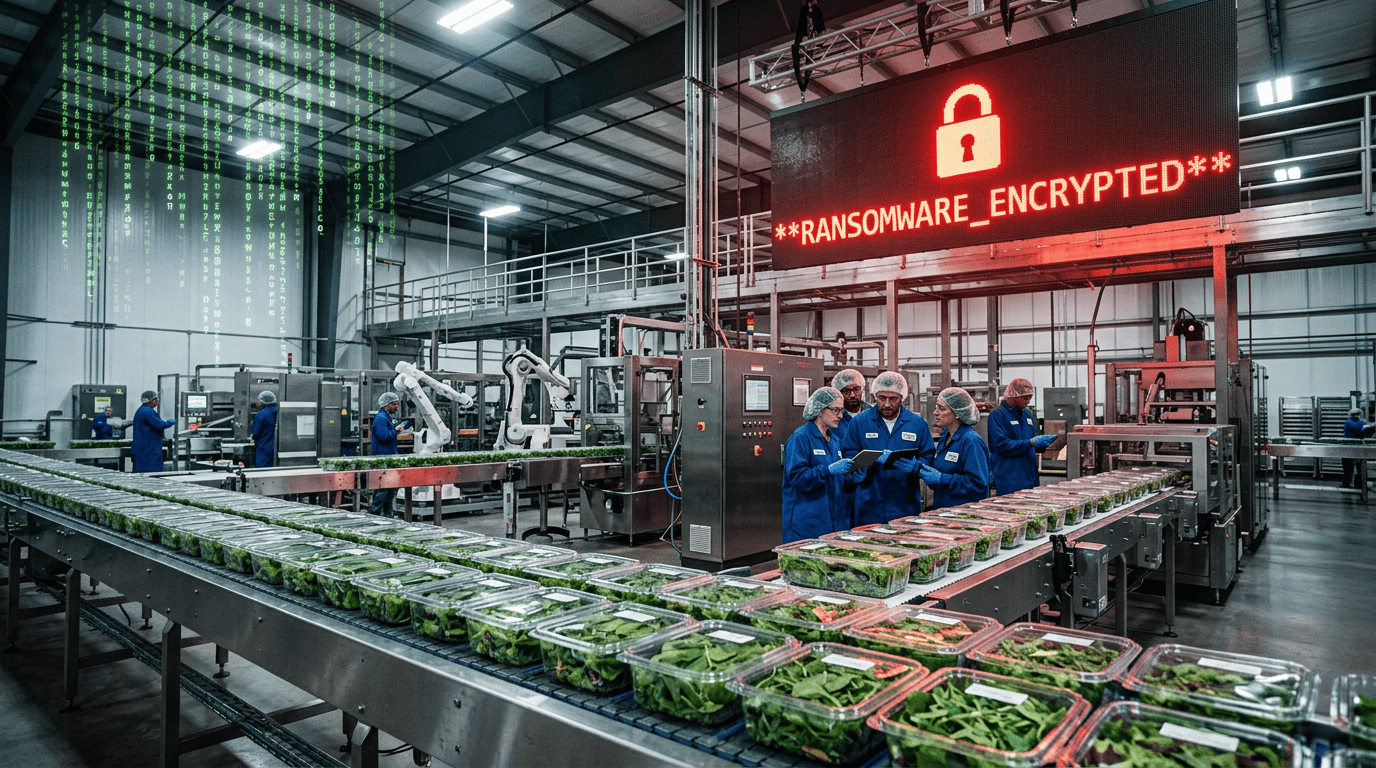
Many manufacturing leaders invest heavily in corporate cybersecurity, expecting those protections to cover their entire business. You install firewalls, enforce password policies, and deploy endpoint protection across your office computers. However, the plant floor runs on a completely different technology environment.
When executives assume their corporate security automatically protects production lines, they often leave massive gaps untouched. These vulnerabilities can lead to unexpected downtime, lost revenue, and damaged customer trust.
This guide explains why corporate security measures fall short on the factory floor and provides practical steps you can take to secure your operations without hiring a full-time cybersecurity team.
The fundamental difference between IT and OT
Many manufacturers have successfully improved their office-side security. However, corporate Information Technology (IT) and factory Operational Technology (OT) serve entirely different purposes.
According to Cisco, IT is centered on front-end informational activities. It manages data, users, and business applications like email and accounting software. Conversely, OT focuses on back-end physical processes. These systems monitor and control the machinery, valves, and robotics that actually manufacture your products.
Because these two environments operate differently, they do not face the same risks. Office technology prioritizes data confidentiality, while plant floor technology prioritizes safety, operational continuity, and constant uptime. Applying the exact same security rules to both areas simply does not work.
How standard security tools create friction in production
Using traditional IT security tools on the factory floor often creates blind spots. Standard office policies, such as automatic software updates or mandatory weekly reboots, can cause disastrous interruptions if applied directly to manufacturing equipment.
Furthermore, Cisco notes that as connectivity increases on the plant floor, so do complexity and security concerns. Every new connected asset introduces another potential vulnerability. If your business environment and production environment are tightly linked, a simple phishing email in the accounting department can spread directly to your manufacturing robotics.
When OT and IT are deeply entangled, a minor office incident quickly escalates into disrupted production, delayed shipments, and expensive emergency recovery efforts.
When office threats stop production lines
Consider a mid-sized manufacturing plant that feels secure because corporate IT has endpoint protection and email filtering in place. An office employee accidentally clicks a malicious email link. The attacker gains access to shared network resources and quickly moves laterally. The company suddenly discovers its production environment lacks proper separation from the office network. Production grinds to a halt because the company must physically isolate systems, limit access, and ensure the machinery is safe before resuming normal operations.
This scenario happens regularly to global industry leaders. During the 2021 JBS Foods ransomware attack, hackers targeted the company's IT systems. However, because their OT networks lacked proper segmentation, JBS had to shut down beef and pork slaughterhouses worldwide to contain the threat. Similarly, a 2023 ransomware attack on food giant Dole forced the company to temporarily halt production plants across North America.
These companies lost millions not because machines were directly hacked, but because poor network boundaries allowed office-side threats to threaten production.
Four practical steps to secure your plant floor
You can protect your manufacturing operations without overwhelming your budget or disrupting your daily workflows. Here are four clear actions to secure your production environment:
- Map your technology assets: Identify exactly what OT and IT assets you own. You need to know what devices are connected, what information is exposed, and where your actual risks sit.
- Segment your networks: Create clear digital boundaries between your office computers and your production machinery. Proper segmentation ensures a routine office-side malware incident cannot easily spread into the plant floor.
- Tighten remote access: Manufacturing often relies on outside vendors and integrators to service machinery remotely. Secure these connection paths with strong authentication and restrict permissions so users can only access the specific machines they need.
- Build a comprehensive response plan: Develop an incident response strategy that includes your plant operations managers, not just corporate IT personnel. Everyone must know exactly what to do if production systems need to be isolated quickly.
Protect your operations without disrupting business
If your security strategy revolves exclusively around office technology, it may not protect the essential systems that keep your production moving. You do not have to tackle this challenge alone, nor do you need to hire an expensive, full-time CTO to fix it.
We help manufacturing leaders identify operational security gaps and reduce enterprise risk. Together, we can build a practical, cost-effective plan that secures your plant floor, improves your competitive position, and supports your business growth. Reach out today to discuss how a tailored cloud and security strategy can empower your team.